Communication or active listening tips infographic.
Turn three to five communication or active listening tips, the situation they are for and short example phrases into one clear infographic for a team or class.
One generated image with your three to five communication tips as numbered cards, each paired with the example phrase you supply, under a title set by your focus. Check the wording of every tip and phrase before sharing.
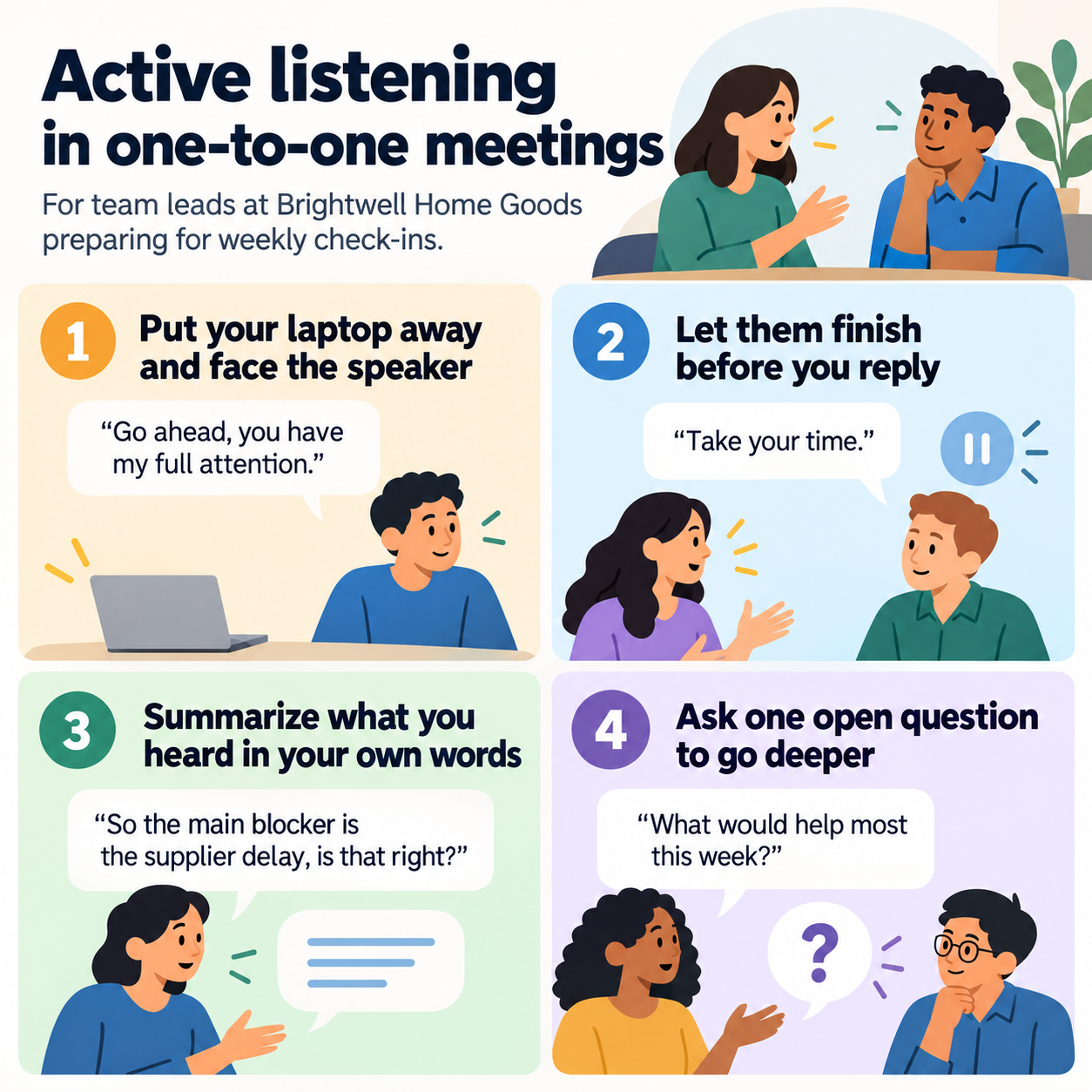
Four active listening tips for team leads, with phrases
Focus
Active listening in one-to-one meetings
Tips, one per line
Put your laptop away and face the speaker
Let them finish before you reply
Summarize what you heard in your own words
Ask one open question to go deeper
Where it will be used (optional)
Team leads at Brightwell Home Goods preparing for weekly check-ins
Example phrase for each tip (optional)
"Go ahead, you have my full attention."
"Take your time."
"So the main blocker is the supplier delay, is that right?"
"What would help most this week?"
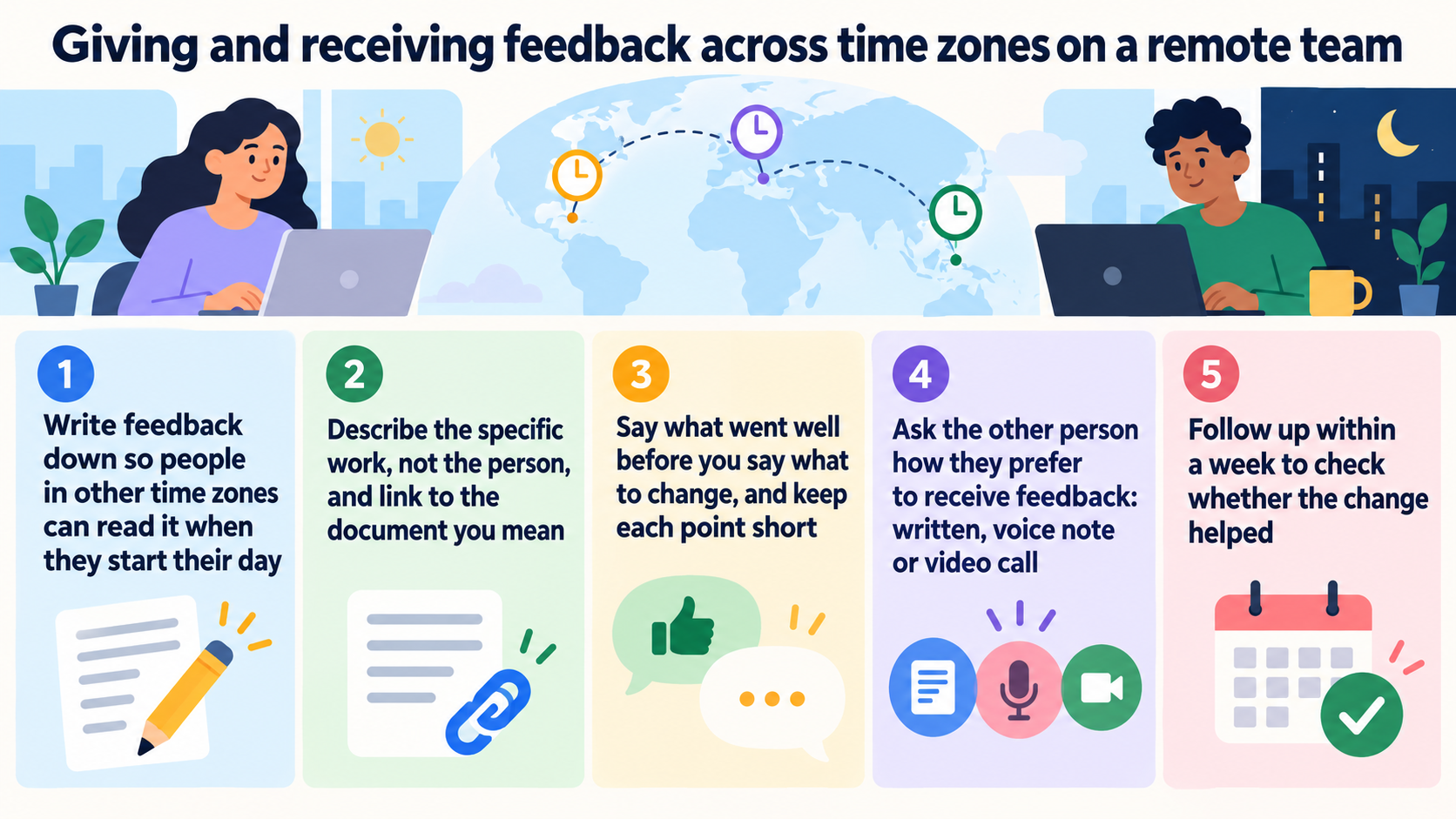
Five long feedback tips with no situation and no phrases
Focus
Giving and receiving feedback across time zones on a remote team
Tips, one per line
Write feedback down so people in other time zones can read it when they start their day
Describe the specific work, not the person, and link to the document you mean
Say what went well before you say what to change, and keep each point short
Ask the other person how they prefer to receive feedback: written, voice note or video call
Follow up within a week to check whether the change helped
Where it will be used (optional)
Left empty
Example phrase for each tip (optional)
Left empty
Five long tips, an empty situation and no example phrases. Checks each card holds its full tip, no phrases are invented to fill space, and the title and icons follow the feedback focus rather than listening.
Same task, three directions
Pick a direction to start from.
01
Numbered cards
Tips on cards in a grid, each with its phrase in a bubble underneath. Suits a chat post or a slide.
02
Conversation strip
Two simple figures talk along the bottom while the tips read left to right above them.
03
Meeting-room checklist
One column of tips with a tick box each, for printing and pinning near a meeting room.
What the template keeps
The parts that stay consistent.
01
Numbered order
Tips keep the order you give, so a sequence such as listen, summarize, ask still makes sense.
02
Tip and phrase together
Each example phrase sits directly under the tip it illustrates.
03
Generic, inclusive figures
Any people shown are simple and varied, so the focus stays on the behavior.
How to use it
From details to a result.
01
Choose the focus
Name the skill, such as active listening or giving feedback. It sets the title and the imagery.
02
List three to five tips
One tip per line, each under about twelve words. Short tips render more reliably.
03
Add the situation and phrases
Say where the tips will be used and, if you like, one example phrase per tip in the same order.
04
Review, generate and proofread
The brief opens in Vizify and runs only when you send it. Read every card on the result before sharing it with the team.
Output boundaries
What to check before you use it.
Tips and phrases are rendered as image text, and long sentences are more likely to contain errors. Keep each tip short and proofread.
Three to five tips per image. A full training module needs several images or a document.
The template adds no research findings, percentages or expert quotes. If you want to cite a source, add the wording and source yourself.
The result is one flat image. Changing a tip later means generating again.
QuestionsCan I make an active listening infographic and a speaking-skills one from the same page?+
Yes. Change the focus field. Active listening gets listening imagery; a focus such as giving feedback or clear emails gets speaking and writing imagery, with your tips for that topic.
Can I include a statistic about communication?+
Only one you can source. Add the figure and its source in the additional direction. The template will not add the popular but unsourced figures that circulate about body language.
Does a communication infographic work in a classroom?+
Yes. Set the situation to something like group projects in Year 8 and write the tips in words your students use.
How long can each tip be?+
Aim for under twelve words. Longer tips wrap onto more lines and are more likely to come back with a typo.