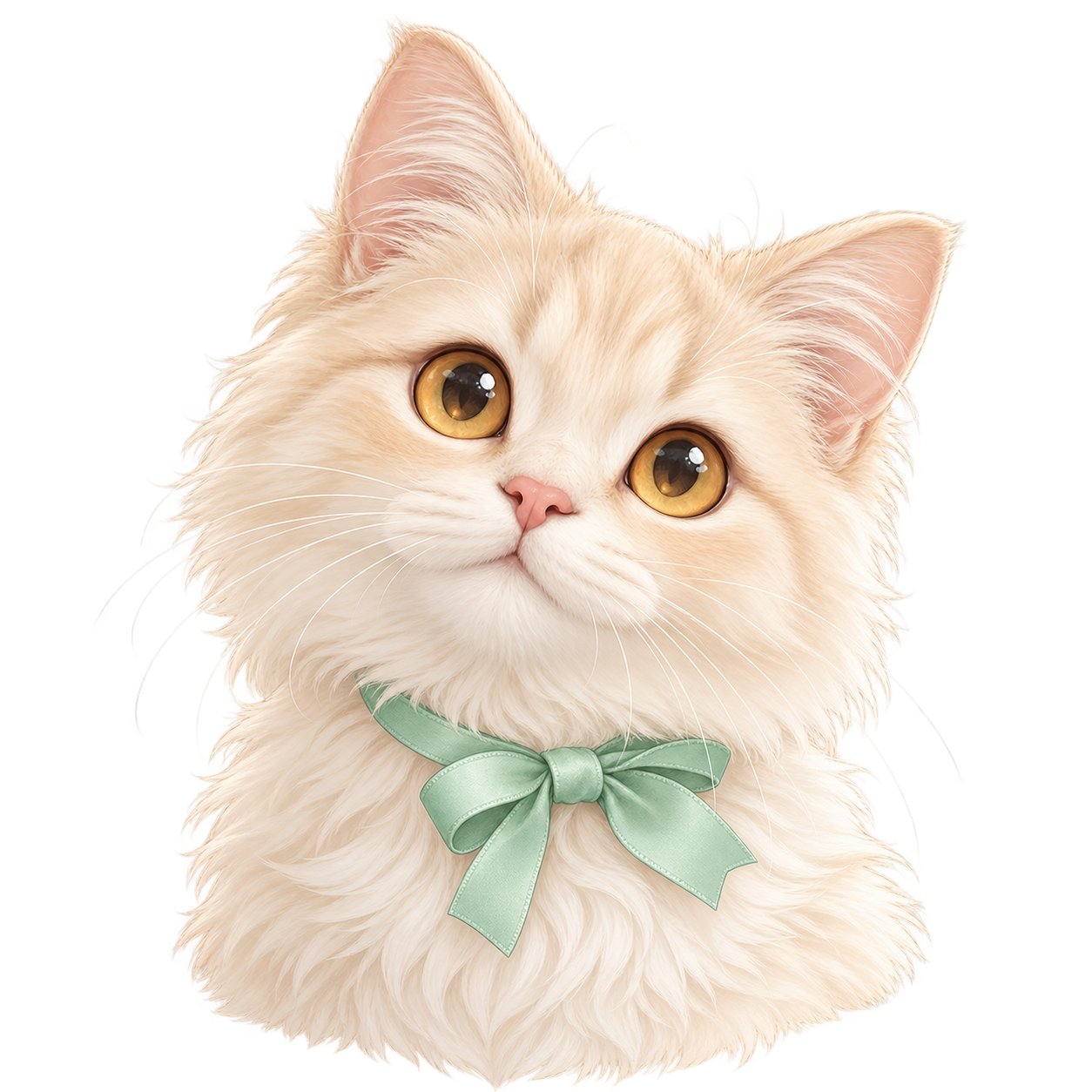
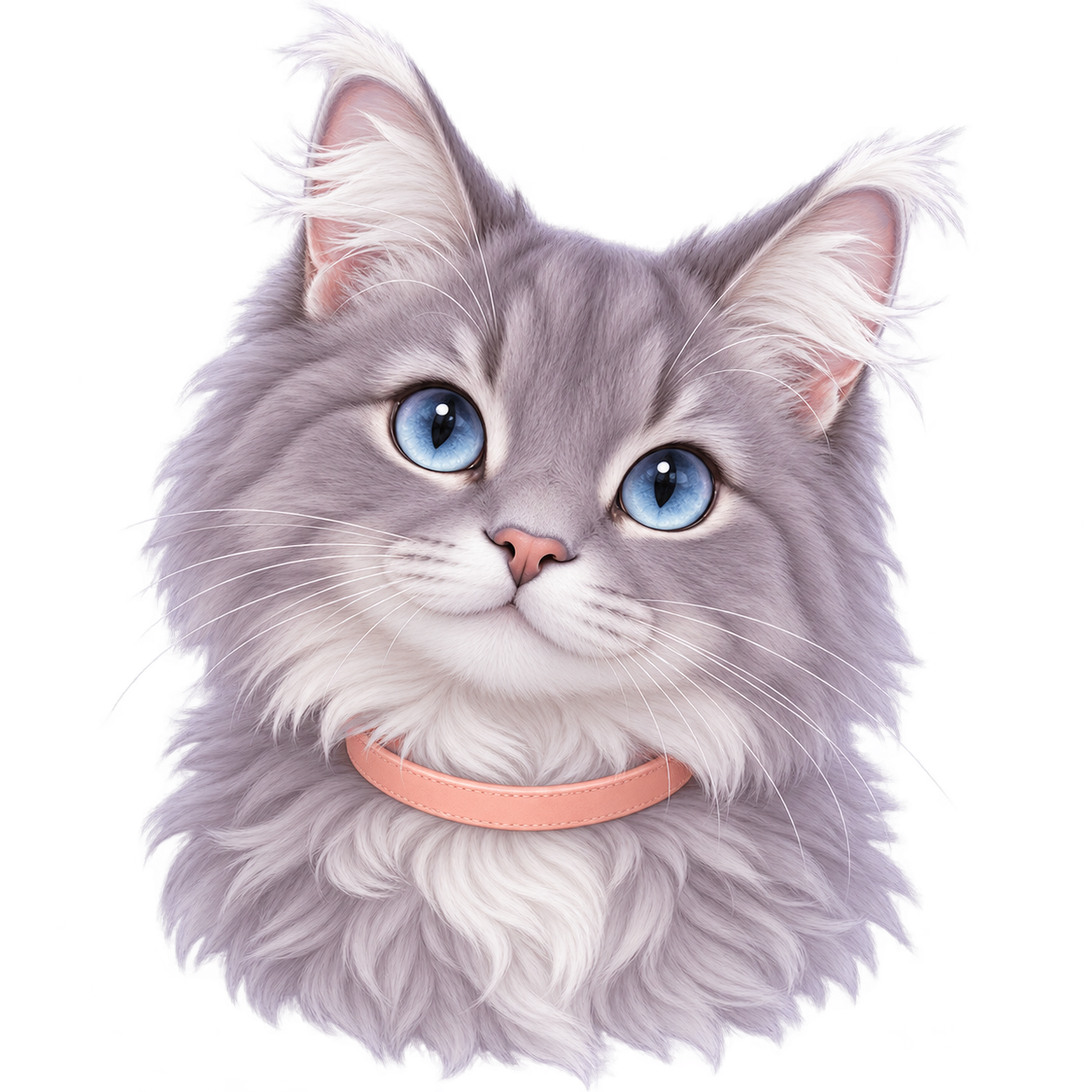
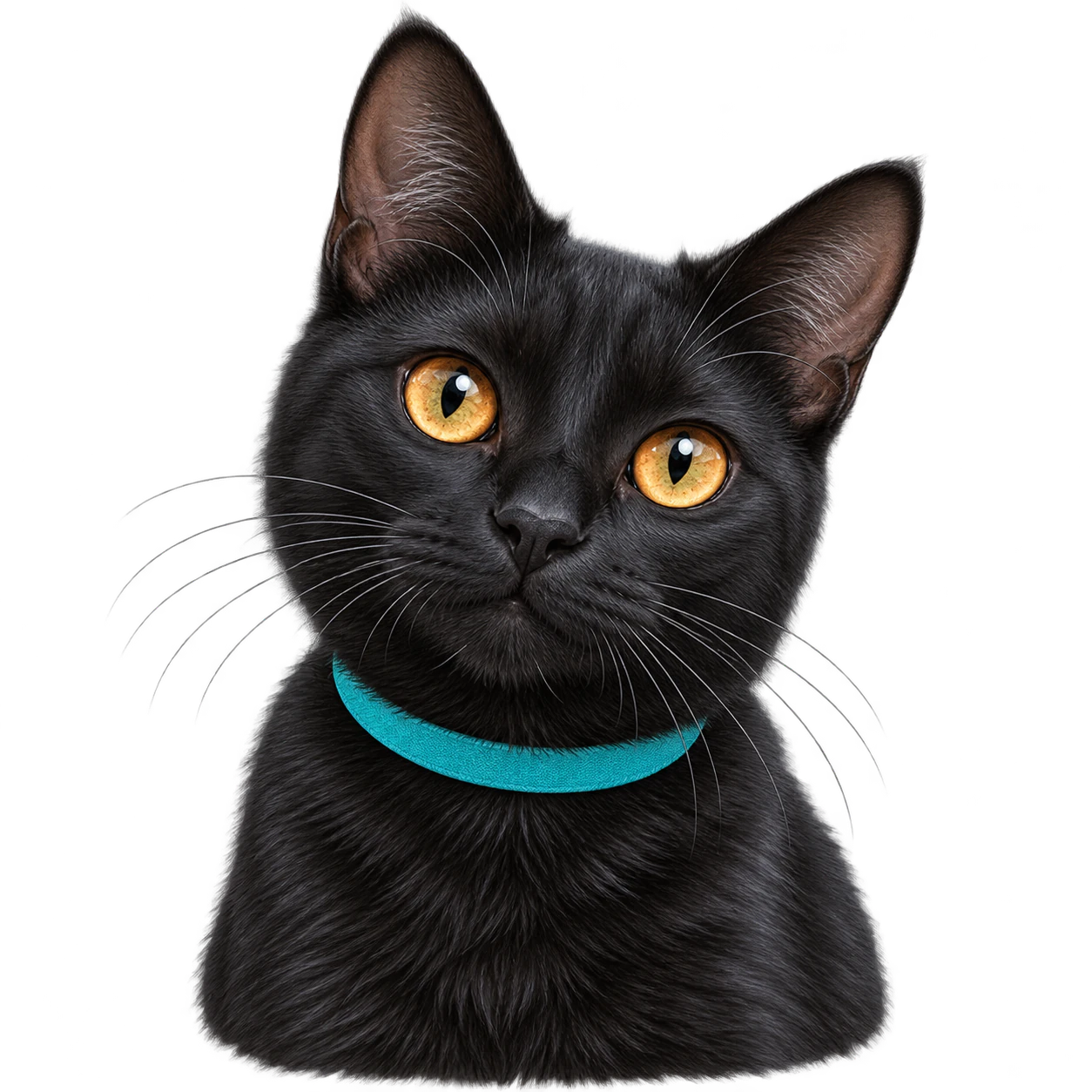
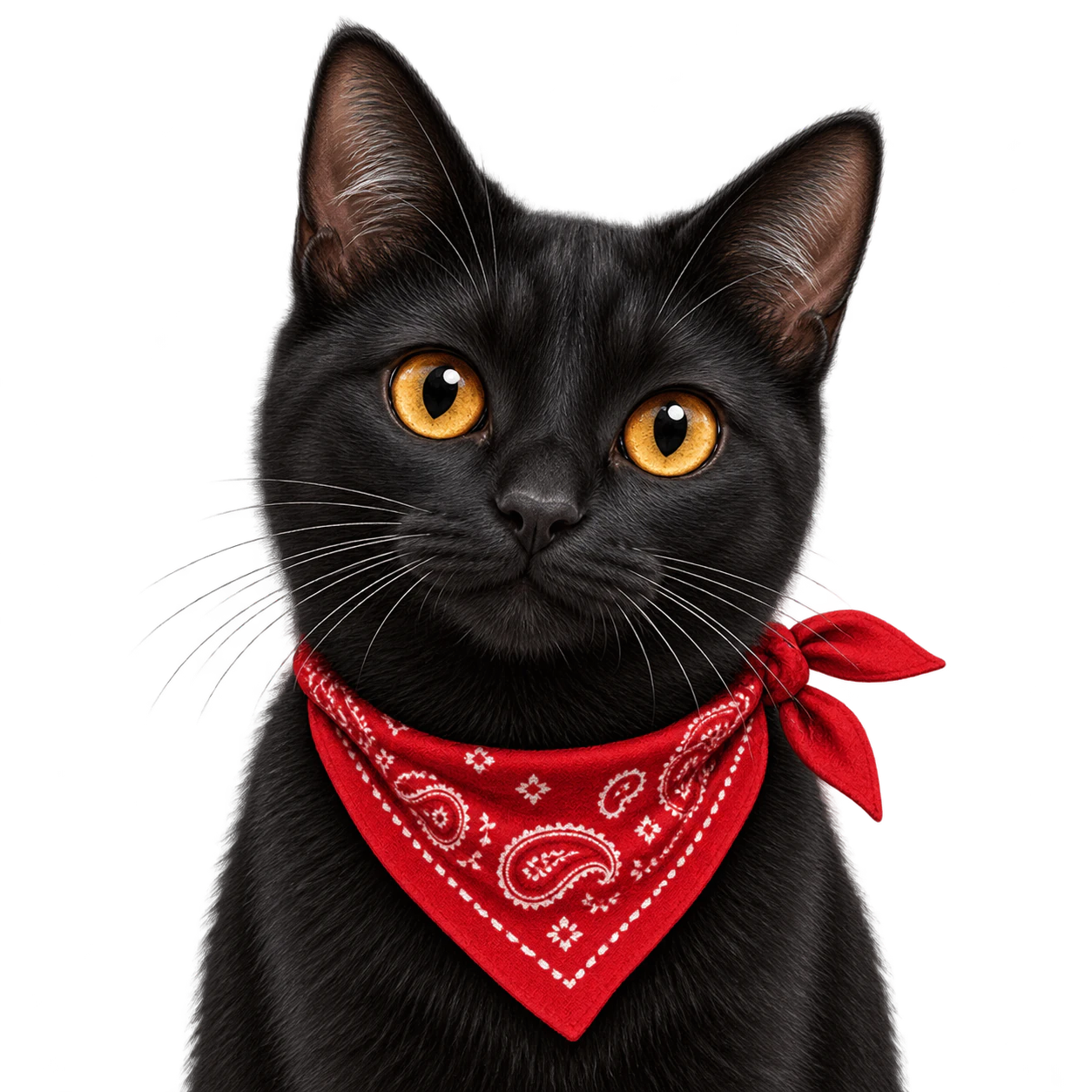
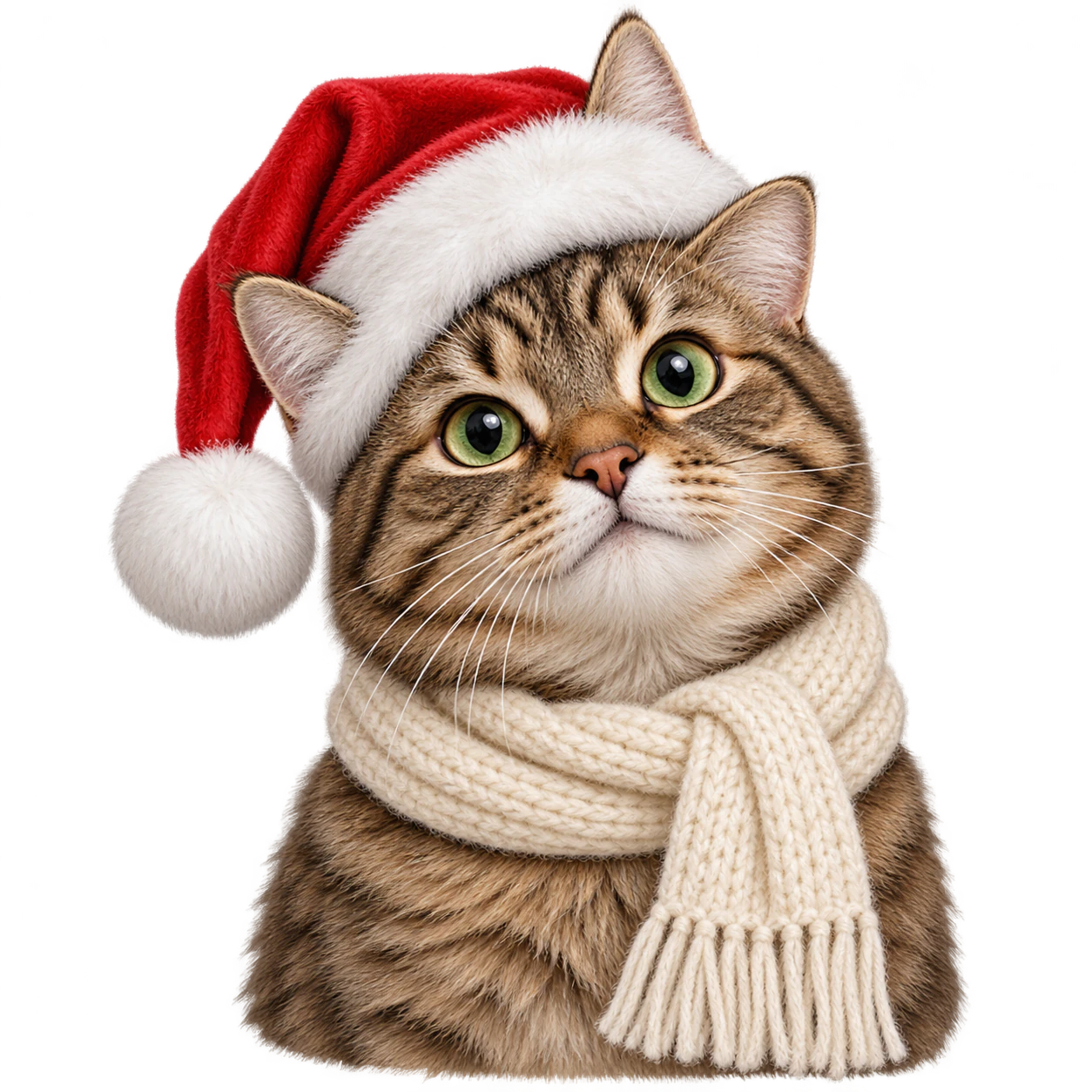
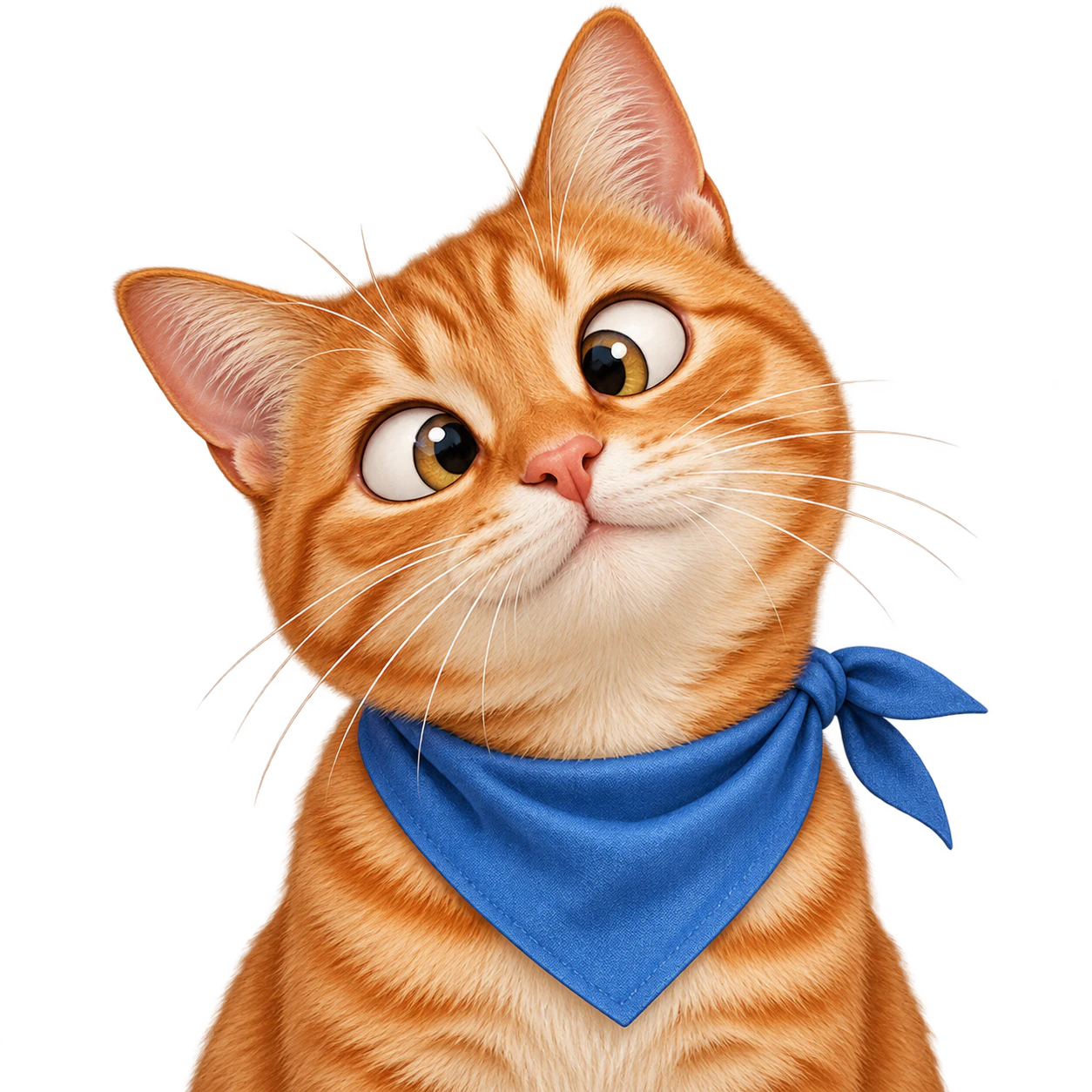
Create one original cute cat avatar with an optional reference. Customize the expression and colors, then check the complete silhouette and genuine PNG transparency.
A single original cute cat with rounded features and soft fur texture. Your description and one optional reference guide the design. Inspect the distinctive features, fine edges and real transparency before using the file.
One original lilac-grey fluffy cat with blue eyes, white ear tufts and a peach collar
Expression and pose
a gentle curious expression, centered head-and-upper-chest portrait
Colors
Use the colors named in the subject; keep them visually distinct
Details to keep
Keep delicate white ear tufts, cheek fur and both blue eyes; no collar tag
Fine details test the cutout: inspect all requested accessories, thin hair or whiskers, and transparent gaps; keep one subject without lettering.
Same task, three directions
Pick a direction to start from.
01
Clear front portrait
A direct view keeps the defining features visible.
02
Gentle three-quarter turn
A small turn adds shape while retaining the chosen expression.
03
Small-icon silhouette
Simpler outer edges improve readability when the avatar is small.
What the template keeps
The parts that stay consistent.
01
One clear subject
The brief keeps attention on one character or animal rather than a scene or a collage.
02
Named colors and details
Your palette and protected features guide the image. Inspect them after generation because details can drift.
03
Room around the silhouette
A square composition leaves space for the ears, hair and accessories, but you still need to check the actual crop.
How to use it
From details to a result.
01
Describe one original subject
Name the hair or fur, clothing, accessories and any markings that make the character yours.
02
Set the expression and keep important details
Add a pose and colors if they matter. You can upload one reference to guide the visual details.
03
Review in Vizify, then send
The description, reference and template brief open in Vizify. Sign in and send when the prepared request is ready.
04
Check the finished file
Inspect the full silhouette and small-size readability. View the file over a colored background to check that its alpha is real.
Output boundaries
What to check before you use it.
Transparency is requested, not guaranteed for every result. Check for real alpha, halos, lost whiskers or hair, and accidental background pixels.
This creates an original cat image; it does not retrieve a particular meme, screenshot or image from a PFP gallery.
The square format is a composition direction, not a guaranteed pixel size, file size or platform-ready crop.
Each request returns one static raster image. Multiple alternatives need separate requests and their own review.
QuestionsIs the background actually transparent?+
The brief requests a PNG with a genuine alpha channel from a compatible model. Inspect the delivered file over a colored surface; a white fill or a drawn checkerboard does not count as transparency.
Can I add a reference image?+
Yes. Add one PNG, JPEG, or WebP up to 10 MB. It guides the requested features and colors, but generation can redraw details.
Does it deliver a platform-ready avatar?+
You get one generated image to inspect. Check the destination's current dimensions, file size and crop requirements, and prepare the file separately when exact pixels are required.